

Endodontics

Endodontics in Tenerife: relieve pain and save your tooth

When deep decay or trauma reaches the pulp (“nerve”), root canals preserve the tooth, control infection, and restore chewing function. At Clínica Bajo (Los Cristianos, Arona, Tenerife) we carry out a clinical and personalized approach to relieve pain and preserve your tooth safely.

What is endodontics?

Endodontics (root canals) is a conservative procedure that removes damaged or infected pulp tissue, disinfects root canals, and seals them tightly to prevent reinfections. In practice, it serves to save the tooth, maintain the supporting tissues and restore chewing function.

When to go? Symptoms of pulp involvement

  • Severe or persistent pain (spontaneous or when chewing).
  • Long-term sensitivity to cold or heat.
  • Change in tooth color.
  • Gingival inflammation, fistula (“pimple”), or drainage.
  • Discomfort after a blow or a deep filling.

Tip: Addressing these signs early increases the chances of preserving the tooth with predictable, less invasive treatment.

Causes and risk factors

Advanced caries that reaches the pulp is the most common cause. It is also required by teeth with fractures or fissures due to trauma, leaks under old restorations or functional overloads. Ignoring them allows the infection to progress and affect the tissues surrounding the root.

Diagnosis

Medical history, intraoral examination and specific tests:

  • Pulp sensitivity tests (cold/heat), percussion and palpation.
  • Periapical radiographs to assess lesions around the root and the anatomy of the canals.

With this information, we define the indication, prognosis and the subsequent restoration plan to guarantee watertightness and resistance.
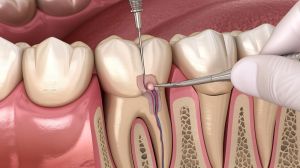
Endodontic rubber dam

Endodontic treatment in Tenerife: steps and phases

Phase 1 — Pain Management and Isolation

Local anesthesia and rubber dam to work in a clean and safe field.

Phase 2 — Duct Access and Disinfection

Opening of access, location of ducts and removal of damaged or infected pulp. Cleaning and shaping with disinfectant irrigation to eliminate bacteria and tissue debris.

Phase 3 — Three-dimensional sealing (sealing)

Hermetic sealing of the ducts to prevent the entry of microorganisms and prevent reinfections.

Phase 4 — Coronary restoration

Filling, inlay, or, in posterior/weakened parts, crown. This phase restores watertightness and resistance to the endodontic tooth, which is key to its longevity.

Depending on the complexity, the treatment can be performed in one or several sessions.
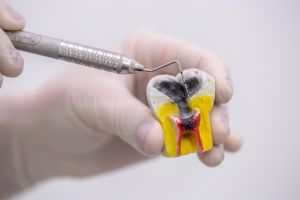
Sealing of canals and crown in endodontics

Clinical follow-up

Check-ups to monitor symptoms, radiographic scarring , and the status of the restoration. Regular maintenance is essential to consolidate results.

Care and recovery

Mild discomfort 24–48 h, usually controllable with prescribed medication. Avoid chewing hard foods on that side until the final restoration. Maintain rigorous hygiene and go for check-ups. If increasing pain, swelling, or fever appears, contact the clinic.

Contraindications / Precautions

The viability depends on whether the piece is restorable and the state of the bone and gum. Vertical fractures or extensive structural loss may discourage conservation. Uncontrolled systemic pathologies, allergies or anticoagulants require specific assessment and guidelines. The indication is always personalized after the examination and tests.

Expected results

With a well-executed plan, pain relief, resolution of infection , and tooth preservation are common. Longevity improves when proper restoration is completed and regular checkups are maintained. We seek to recover function and comfort, without absolute promises.

FAQ

Does a root canal hurt?
With local anesthesia, the procedure is painless; Mild, transient discomfort may remain.

Is it done in a single visit?
It depends on the anatomy and the state of the infection; It may require one or more sessions.

Can you give me a quote by phone or email?
No. The budget is prepared after the clinical assessment and the necessary tests.
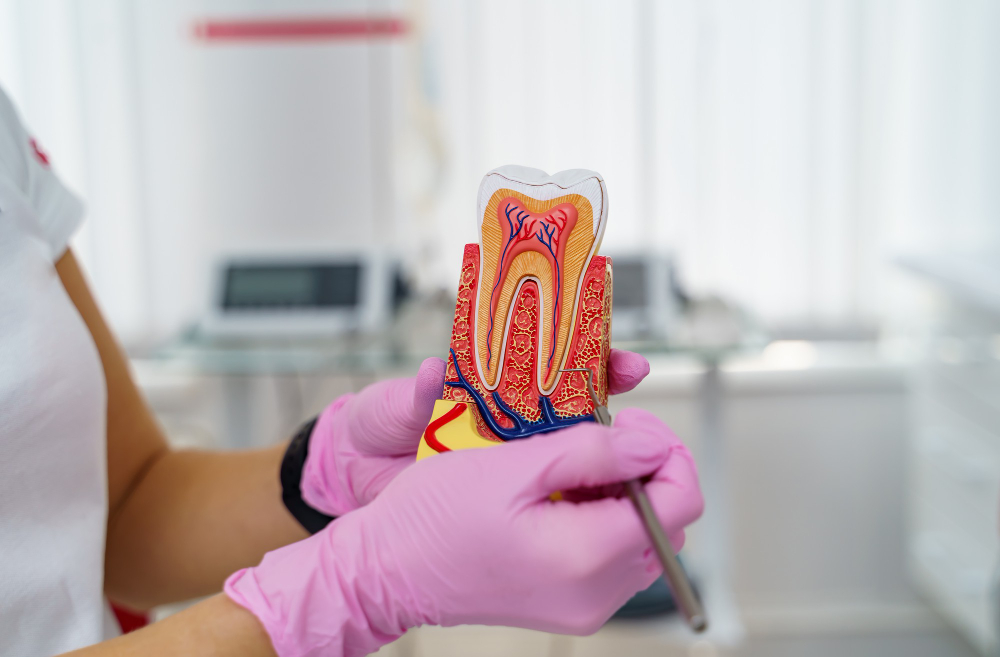
Endodontics in Tenerife: relieve pain and save your tooth

When deep decay or trauma reaches the pulp (“nerve”), root canals preserve the tooth, control infection, and restore chewing function. At Clínica Bajo (Los Cristianos, Arona, Tenerife) we carry out a clinical and personalized approach to relieve pain and preserve your tooth safely.

What is endodontics?

Endodontics (root canals) is a conservative procedure that removes damaged or infected pulp tissue, disinfects root canals, and seals them tightly to prevent reinfections. In practice, it serves to save the tooth, maintain the supporting tissues and restore chewing function.

When to go? Symptoms of pulp involvement

  • Severe or persistent pain (spontaneous or when chewing).
  • Long-term sensitivity to cold or heat.
  • Change in tooth color.
  • Gingival inflammation, fistula (“pimple”), or drainage.
  • Discomfort after a blow or a deep filling.

Tip: Addressing these signs early increases the chances of preserving the tooth with predictable, less invasive treatment.

Causes and risk factors

Advanced caries that reaches the pulp is the most common cause. It is also required by teeth with fractures or fissures due to trauma, leaks under old restorations or functional overloads. Ignoring them allows the infection to progress and affect the tissues surrounding the root.

Diagnosis

Medical history, intraoral examination and specific tests:

  • Pulp sensitivity tests (cold/heat), percussion and palpation.
  • Periapical radiographs to assess lesions around the root and the anatomy of the canals.

With this information, we define the indication, prognosis and the subsequent restoration plan to guarantee watertightness and resistance.

Endodontic rubber dam

Endodontic treatment in Tenerife: steps and phases

Phase 1 — Pain Management and Isolation

Local anesthesia and rubber dam to work in a clean and safe field.

Phase 2 — Duct Access and Disinfection

Opening of access, location of ducts and removal of damaged or infected pulp. Cleaning and shaping with disinfectant irrigation to eliminate bacteria and tissue debris.

Phase 3 — Three-dimensional sealing (sealing)

Hermetic sealing of the ducts to prevent the entry of microorganisms and prevent reinfections.

Phase 4 — Coronary restoration

Filling, inlay, or, in posterior/weakened parts, crown. This phase restores watertightness and resistance to the endodontic tooth, which is key to its longevity.

Depending on the complexity, the treatment can be performed in one or several sessions.

Sealing of canals and crown in endodontics

Clinical follow-up

Check-ups to monitor symptoms, radiographic scarring , and the status of the restoration. Regular maintenance is essential to consolidate results.

Care and recovery

Mild discomfort 24–48 h, usually controllable with prescribed medication. Avoid chewing hard foods on that side until the final restoration. Maintain rigorous hygiene and go for check-ups. If increasing pain, swelling, or fever appears, contact the clinic.

Contraindications / Precautions

The viability depends on whether the piece is restorable and the state of the bone and gum. Vertical fractures or extensive structural loss may discourage conservation. Uncontrolled systemic pathologies, allergies or anticoagulants require specific assessment and guidelines. The indication is always personalized after the examination and tests.

Expected results

With a well-executed plan, pain relief, resolution of infection , and tooth preservation are common. Longevity improves when proper restoration is completed and regular checkups are maintained. We seek to recover function and comfort, without absolute promises.

FAQ

Does a root canal hurt?
With local anesthesia, the procedure is painless; Mild, transient discomfort may remain.

Is it done in a single visit?
It depends on the anatomy and the state of the infection; It may require one or more sessions.

Can you give me a quote by phone or email?
No. The budget is prepared after the clinical assessment and the necessary tests.